
Getting Stuck in the Snow
Winter brings with it all sorts of fun and headaches. Driving on slick, snowy roads is not fun. Getting stuck in the snow is even worse – whether you skidded off the road into a snowbank or ditch, or if your car got snowed in while parked. It’s frustrating and it can be difficult to figure out the best way get unstuck, especially without causing any damage to your car.
Some Easy Tips for Getting Your Car Unstuck
Clear the Tailpipe
First, make sure the tailpipe is not covered by snow. Clear any snow away that might interfere with the exhaust from getting out. You don’t want exhaust building up inside the car, plus it could cause the engine to stall if the fumes can’t escape.
Clear Away Snow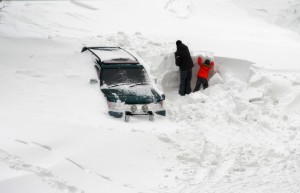

If you keep that shovel in your trunk like we’ve advised you to in other articles about preparing your car for winter, you’ll be able to easily dig away all the snow and ice buildup from in front of and behind all four tires. Also be sure to clear snow out from under the car as much as possible. If you can, clear some extra space in front of the car to make a path to drive into. Once your car becomes unstuck and starts moving forward, having a good clearing for your car to move into will help you keep forward momentum and avoid getting stuck again.
Create Traction With Sand, Kitty Litter, or Car Mats
Again, if you’re really prepared you probably have some sand or kitty litter in the trunk for just such a situation as being stuck. Put some under the drive wheels first. If you don’t have sand or kitty litter, you can use car mats – anything rough (or just not as slick as snow and ice) will help the tires get some traction and start moving your car. Car mats also serve to flatten out the snow more evenly, and prevent it from hugging directly around the tires, as the car slowly moves over them. This helps the tires to not sink so easily into the snow. Make sure that the drive wheels are getting as much equal traction as possible. Be careful to apply the gas slowly, gently. Otherwise whatever you put under the drive wheels – sand, gravel, car mats, tree branches – will just shoot out from under them.
Braking and Rocking
If one wheel is spinning more than the other because it has less to traction, try pushing the brakes lightly. This increases the minimum torque that is needed to turn each wheel and transfers some of the power to the other non-spinning wheel so that both are working to pull (or push) the car out of the snow. Be careful not to do this for too long, as the brakes can overheat and end up damaged.
You can also try rocking your car. This method is up for debate, because it can damage your transmission if done improperly or too much. Shifting momentum so quickly is just not good for the transmission and all of its intricate parts and subsystems. Rocking the car should only be done in the most desperate situations. Steadily alternate between first gear, or drive, and reverse as you gently apply gas in each direction. Don’t spin the wheels and make sure you only apply the gas once you are in gear. To help stop from rolling back into the holes your tires dug, apply the brakes between first and reverse as you shift. Ideally, you will build up enough momentum to power out of the ruts and move forward onto better ground where you can get traction again and keep moving. Again, use the rocking method only as a last resort.
Let Some Air Out of the Tires

This should be done with extreme care. By letting some air out of the drive tires, they gain a little more surface area, and are a little softer and more sticky than a hard, inflated tire, which means they have a better chance of gaining traction. But do not let out so much air that they look flat, because that means they probably are, and then you’ve got another problem to deal with. Air shrinks when it’s cold, so be careful with this tactic. The rule is that your tires should already be inflated per manufacturer’s recommendations for the operating conditions.
Turn the Wheels
If you have a front-wheel drive car, turn the wheels in either direction as you gently push the gas. This might expose the tires to that much needed unseen patch of pavement or dirt, or provide just the right angle to gain that little bit of traction needed to get out. Remember that key to all of these methods is to accelerate slowly. Do not spin the wheels, or you’ll just dig yourself deeper.
A Good Old Fashioned Push
If you are not alone, or if you can get someone nearby to help, have them give your car a push as you gently apply the gas. Pushing the car forward with each shift into first as you are rocking the car can also help a lot. It provides an extra surge of momentum forward, if you do have to use the rocking method to get unstuck. Always make sure the person pushing is on stable footing and clear of the drive tires. Debris and ice might fly out from under the tires, which can be dangerous to anyone standing behind the tires or in the path of anything shooting out from under them.
AAMCO Minnesota for a Quick Car Checkup
Now that you’ve gotten unstuck, it’s probably a good idea to come by your locally owned and operated AAMCO Minnesota Transmission and Car Repair Center for a transmission check or multi-point inspection. Whatever you drive, and however you get unstuck, you can count on AAMCO to service and repair your car.
If you have questions about your car’s condition after being stuck or about car repair and maintenance, AAMCO Minnesota can help. Stop by or call a local AAMCO Minnesota repair shop for a Multi Point Vehicle Courtesy Check for your transmission and related systems. We’ll winterize your car and get you ready for the cold, snowy winter driving months ahead. We can handle all your scheduled car maintenance and repairs, from brakes to factory recommended maintenance.