Your brakes are extremely important when it comes to the health and condition of your car. More than keeping your car healthy, good brakes will keep you safe. Your brakes are responsible for stopping thousands of pounds of metal and plastic which you are driving around town. Consider, for a moment, how much momentum your car builds while you’re driving. Now try to imagine how much force it takes to stop it. Your braking system is really doing a lot of work to keep you safe and in one piece.
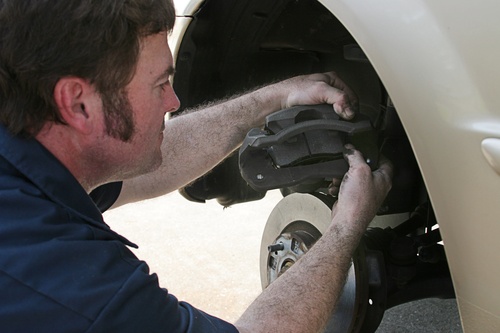
An auto mechanic working on disc brakes, inserting new brake pads in the caliper.
Neglecting your brake system for a long period of time will absolutely lead to increased repair costs, brake failure, or worse. Fortunately, paying attention to your brakes before anything serious happens is a sure fire way to prevent major costs from accruing. If you regularly drive your car, you shouldn’t have difficulty noticing when your brakes are starting to go. The most obvious indication that your brakes need attention is a high pitched squeal when stopping. Brake pad manufacturers have included a small piece of metal, called an ‘indicator’, inside the pad itself. When the material wears down to about ¼ of an inch, you will hear this piece of metal touching the vehicle’s rotor.
Related: What Gas Type Is Best For My Car?
Related: What Is An Automatic Braking System
Replacing your brakes in a timely manner will also prevent you from having to replace your rotors each time you have your brake pads replaced. A good pair of rotors will last through several brake changes, assuming they aren’t getting damaged or worn down. If you notice your steering wheel wiggling in your hands as you come to a stop, this is a pretty clear sign that the rotors are warped and either need to be replaced or ‘turned’. Turning your rotors involves shaving enough metal off to make them smooth again. Though they may suggest turning them, generally speaking, you should replace them entirely.
Sticking to a brake maintenance schedule will really save you headaches in the future. Consult your user manual for recommendations and information regarding your vehicle’s brake system. Some manufacturers will suggest inspecting them when there is less than 1/8th of an inch of pad lining, or around every 25,000 miles. It is also a good idea to locate your brake fluid reservoir and periodically check that there is plenty of fluid available.
You may inevitably opt to wait until your car comes to a screeching halt, but this will certainly end up costing you more in the long run. Don’t wait for a minor issue to become a major problem, especially when it comes to something as straightforward as brakes. If your car is making a strange sound, or you think your brakes are due for some maintenance, give us a call today at 1 (877) 79-AAMCO, or schedule an appointment with your local AAMCO. We will get your car back to its full glory so you can rest assured that you are safe.